Monitoring the condition of bridges, roads, tunnels, and other critical infrastructure is essential for ensuring public safety and preventing costly failures. However, developing reliable AI solutions for this task has been limited by the scarcity of high-quality annotated data.
Latest News
Artificial intelligence systems continue to evolve rapidly, but this progress is often accompanied by rising computational requirements and energy consumption. Training and deploying modern machine learning models can require substantial hardware resources, creating challenges related to scalability, operational cost, and environmental impact.
As artificial intelligence systems continue to expand into everyday applications, concerns regarding their computational demands and environmental impact are becoming increasingly important. Modern AI models often require significant processing power and energy consumption, raising questions about scalability and long-term sustainability.
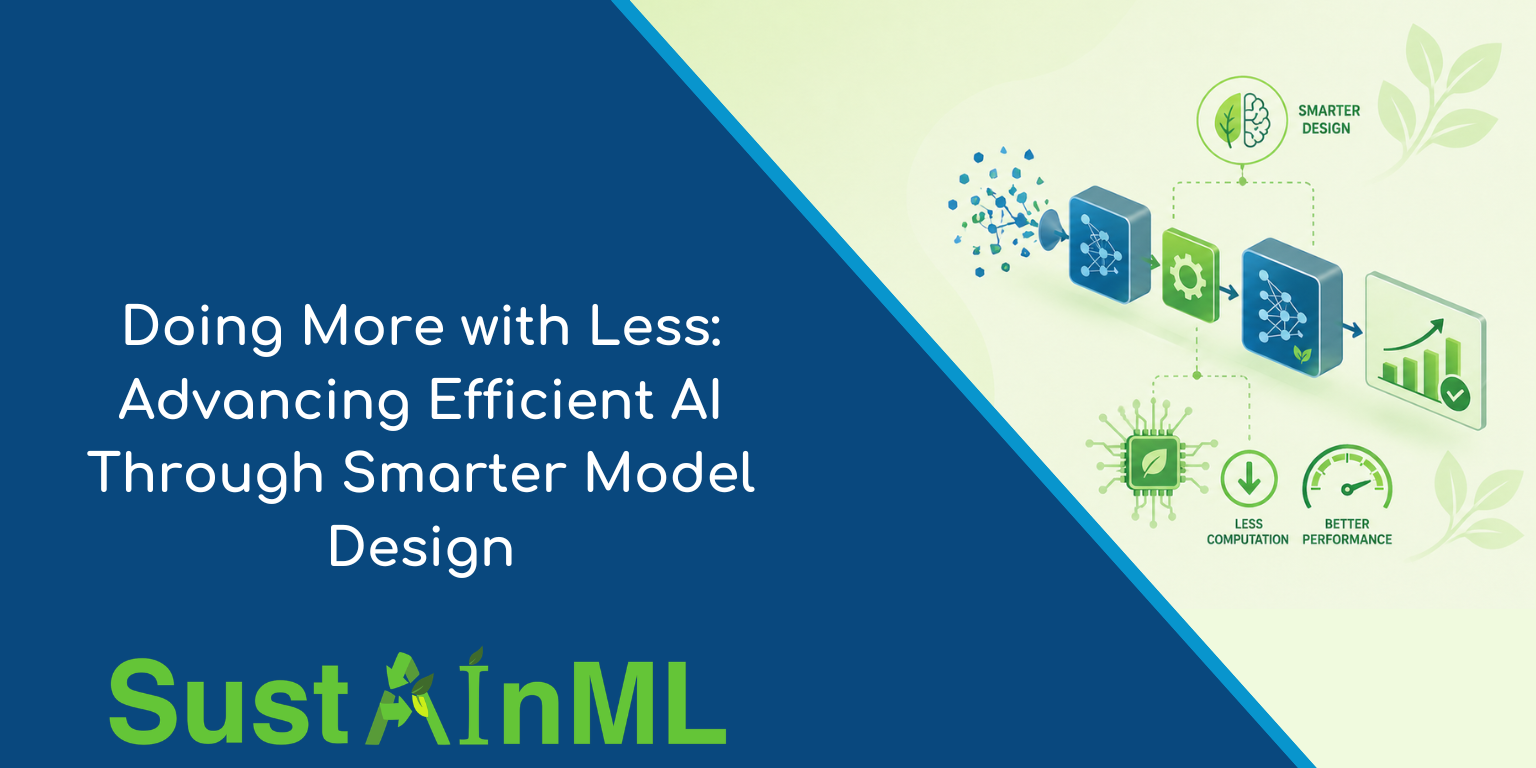
A new research work explores how machine learning systems can be designed to achieve strong performance while reducing unnecessary computational overhead. As AI models continue to grow in size and complexity, improving efficiency without sacrificing accuracy has become a key challenge for building more sustainable AI systems.
The study introduces a novel approach that focuses on optimizing how models process and represent information, leading to improved performance while maintaining a more efficient use of computational resources.
More details about the methodology and experimental evaluation can be found in the paper “A Case Study on Energy-Efficient Edge AI Crack Segmentation” (arXiv:2604.13933).

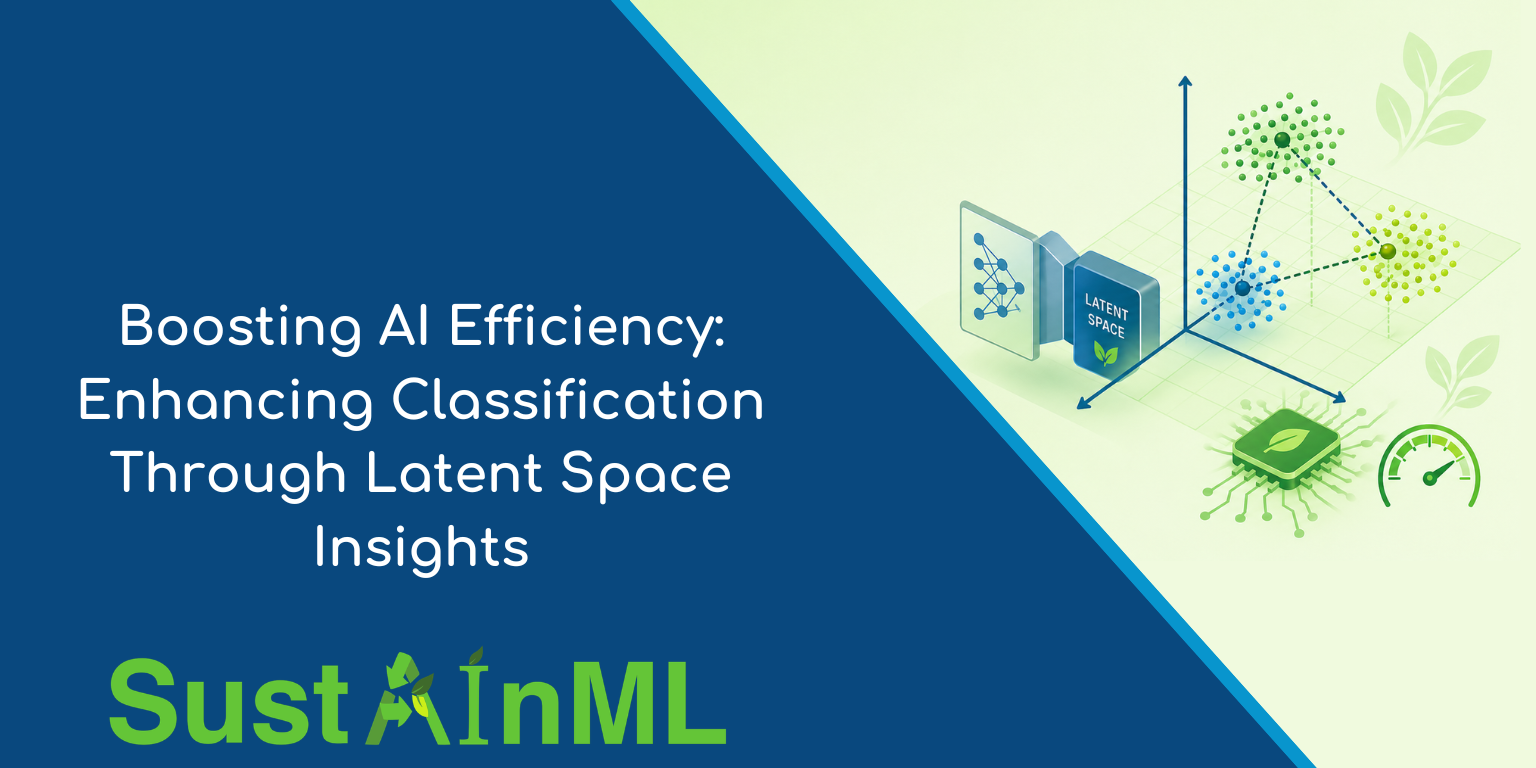
As machine learning models continue to evolve, improving their performance without increasing computational cost remains a key challenge. A new research work titled “Latent Boost: Leveraging Latent Space Distance Metrics to Augment Classification Performance” proposes an innovative solution by making better use of the information already learned by models.

SustainML is among these nine innovative projects dedicated to creating a sustainable ML framework for Green AI.
Coordinator Office Address
Plaza de la Encina 10-11, Núcleo 4, 2ª Pl.
28760 Tres cantos - Madrid (España)
This project has received funding from the European Union’s Horizon Europe research and innovation programme under grant agreement No 101070408.